---
title: How Do I Add Schema Markup to My Sierra Website for Better SEO?
description: Learn how to boost your real estate website’s SEO by adding Schema Markup to key pages in your Sierra Interactive site. Includes copy/paste templates and best practices.
image: https://www.sierrainteractive.com/wp-content/uploads/2022/07/Website-Preview-V2A.jpg
---
[Skip to content](https://help.sierrainteractive.com/helpcenter/how-do-i-add-schema-markup-to-my-sierra-website-for-better-seo#main-content)
[Contact Support](https://help.sierrainteractive.com/helpcenter/kb-tickets/new?hsLang=en)
[](https://help.sierrainteractive.com/helpcenter?hsLang=en)
- [Sierra CRM Login](https://client.sierrainteractivedev.com/login.aspx?sn=sierrainteractive.com)
- [Sierra Support](https://share.hsforms.com/1-PkIvKPkRJ2Oe4iP28LPugcrxj0?__hstc=240356316.ca34a03f98730f420ad639300528f2a2.1764955183725.1783970890126.1783975123568.351&__hssc=240356316.31.1783975123568&__hsfp=3cbed2008eb4c720102b6f72b9dd6767)
- [Training & Learning](https://info.sierrainteractive.com/live-training-learning-opportunities)
Show submenu for Training & Learning
- [Sierra Academy](https://info.sierrainteractive.com/sierra-academy)
- [Live Training Sessions](https://help.sierrainteractive.com/helpcenter/join-live-training-sessions-explore-sierra-learning-resources)
Show submenu for Live Training Sessions
- [Tuesdays 11AM ET](https://us02web.zoom.us/j/81520282538)
- [Wednesdays 1:30PM ET](https://us02web.zoom.us/j/84246589732)
- [Fridays 3PM ET](https://us02web.zoom.us/j/86964951435)
- [Sierra YouTube Channel](https://www.youtube.com/@sierrainteractive/featured)
- [Sierra Facebook Mastermind](https://www.facebook.com/groups/sierrainteractive)
- [Referral Dashboard](https://www.sierrainteractive.com/customer-referral-dashboard/)
- [Operations & Closures](https://info.sierrainteractive.com/sierra-interactive-observed-holidays)
- [System Status](https://status.sierrainteractive.com/)
Open main navigation
Close main navigation
- [Sierra CRM Login](https://client.sierrainteractivedev.com/login.aspx?sn=sierrainteractive.com)
- [Sierra Support](https://share.hsforms.com/1-PkIvKPkRJ2Oe4iP28LPugcrxj0?__hstc=240356316.ca34a03f98730f420ad639300528f2a2.1764955183725.1783970890126.1783975123568.351&__hssc=240356316.31.1783975123568&__hsfp=3cbed2008eb4c720102b6f72b9dd6767)
- [Training & Learning](https://info.sierrainteractive.com/live-training-learning-opportunities)
Show submenu for Training & Learning
- [Sierra Academy](https://info.sierrainteractive.com/sierra-academy)
- [Live Training Sessions](https://help.sierrainteractive.com/helpcenter/join-live-training-sessions-explore-sierra-learning-resources)
Show submenu for Live Training Sessions
- [Tuesdays 11AM ET](https://us02web.zoom.us/j/81520282538)
- [Wednesdays 1:30PM ET](https://us02web.zoom.us/j/84246589732)
- [Fridays 3PM ET](https://us02web.zoom.us/j/86964951435)
- [Sierra YouTube Channel](https://www.youtube.com/@sierrainteractive/featured)
- [Sierra Facebook Mastermind](https://www.facebook.com/groups/sierrainteractive)
- [Referral Dashboard](https://www.sierrainteractive.com/customer-referral-dashboard/)
- [Operations & Closures](https://info.sierrainteractive.com/sierra-interactive-observed-holidays)
- [System Status](https://status.sierrainteractive.com/)
- [Contact Support](https://help.sierrainteractive.com/helpcenter/kb-tickets/new)
Search Help Center
- There are no suggestions because the search field is empty.
1. [Help Center](https://help.sierrainteractive.com/helpcenter?hsLang=en)
2. [Website Management](https://help.sierrainteractive.com/helpcenter/website-management?hsLang=en)
3. [Analytics](https://help.sierrainteractive.com/helpcenter/website-management?hsLang=en#analytics)
June 23, 2026
# How Do I Add Schema Markup to My Sierra Website for Better SEO?
## Schema markup improves how your site appears in search results. Learn how to add it to your Sierra Interactive website for better SEO and visibility.
### Table of Contents
1. [Why This Feature Matters](https://help.sierrainteractive.com/helpcenter/how-do-i-add-schema-markup-to-my-sierra-website-for-better-seo#why)
2. [How to Add Schema Markup in Sierra](https://help.sierrainteractive.com/helpcenter/how-do-i-add-schema-markup-to-my-sierra-website-for-better-seo#how)
3. [Best Practices](https://help.sierrainteractive.com/helpcenter/how-do-i-add-schema-markup-to-my-sierra-website-for-better-seo#best)
4. [Troubleshooting Common Issues](https://help.sierrainteractive.com/helpcenter/how-do-i-add-schema-markup-to-my-sierra-website-for-better-seo#issue)
5. [FAQs](https://help.sierrainteractive.com/helpcenter/how-do-i-add-schema-markup-to-my-sierra-website-for-better-seo#faq)
---
### Why This Feature Matters
Schema Markup is a type of structured data that helps Google and other search engines better understand the content on your website. For real estate professionals, using Schema can:
- Increase visibility in search results with “rich snippets”
- Improve click-through rates
- Enhance local SEO by providing accurate business info
- Drive more qualified traffic to your listings, blogs, and community pages
Adding Schema is a small technical step that creates a big competitive edge, especially in crowded local markets.
[back to the top](https://help.sierrainteractive.com/helpcenter/how-do-i-add-schema-markup-to-my-sierra-website-for-better-seo#top)
---
### How to Add Schema Markup in Sierra
#### **Option 1: Add to a Specific Page**
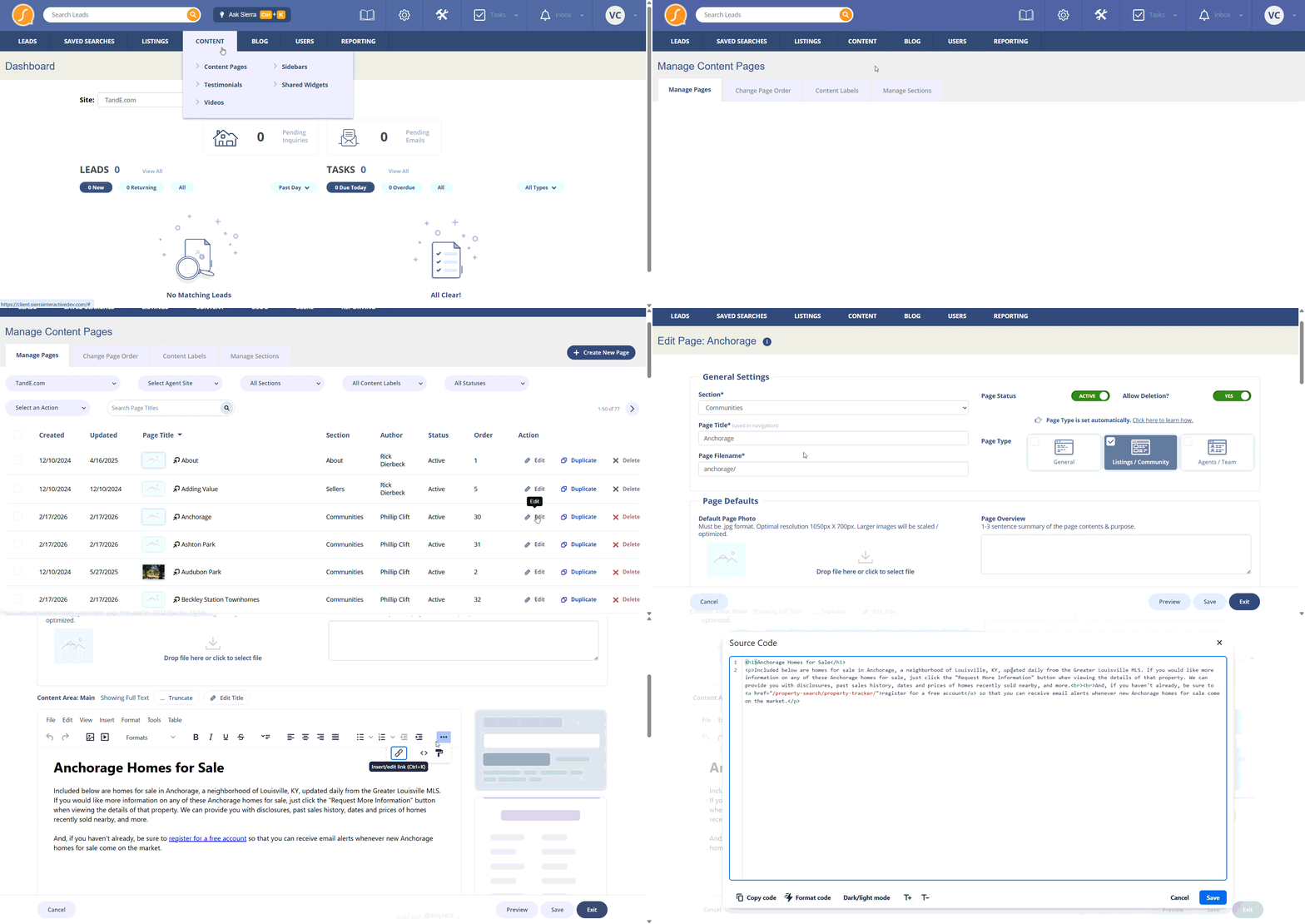
1. Go to **Content \> Content Pages**
2. Select the page you want to edit (e.g., “About Us,” a blog post, or a community page)
3. Click **Edit \> HTML Source Editor** in the Content Area
4. **Paste the full Schema code block**, starting and ending with ``
into the content area—typically at the bottom of the HTML
1. **Example:**
``
2. You do not need to search for a \ tag or insert into existing script tags. Just paste the full schema block into the editable area provided.
5. Click **Save**
💡 **Adding a third-party widget instead?** If you're embedding an Elfsight widget on a Content Page or Blog Post, use the dedicated Elfsight Page Component rather than the HTML Source Editor. See Enhance Your Pages with Elfsight Widgets for instructions.
#### **Option 2: Add to Your Homepage Site-Wide**
1. Navigate to **Site Layout Settings \> Tracking & Conversion Codes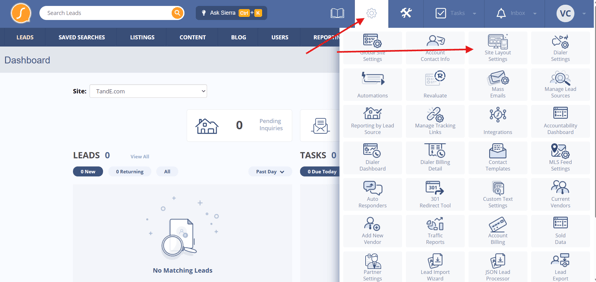**
2. Paste your full Schema code block into the **\ field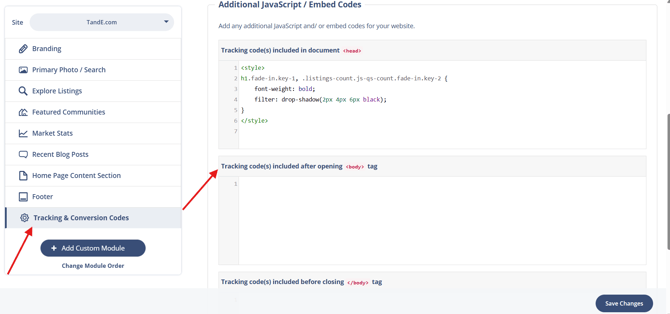**
3. Click **Save**
💡This inserts your schema just before the closing \ tag across your site layout. This is ideal for adding organization-wide data like business name, logo, and contact info.
[back to the top](https://help.sierrainteractive.com/helpcenter/how-do-i-add-schema-markup-to-my-sierra-website-for-better-seo#top)
---
### Best Practices
- Test your code using **Google’s Rich Results Test**
- Double-check your JSON formatting. Missing commas, brackets, or quotes will break the code
- Prioritize schema on high-traffic pages like your **homepage**, **About Us**, **Contact**, **Community pages**, and **blog posts**
[back to the top](https://help.sierrainteractive.com/helpcenter/how-do-i-add-schema-markup-to-my-sierra-website-for-better-seo#top)
---
### Troubleshooting Common Issues
| **Issue** | **Solution** |
| --- | --- |
| My schema isn't working | Ensure all Schema is formatted correctly between the \ tags. \. You do not need to search for a closing body tag or insert into existing script tags. Just paste the full schema block into the editable area provided."
}, {
"@type" : "HowToStep",
"name" : "Click Save",
"text" : "Click Save"
}, {
"@type" : "HowToStep",
"name" : "Navigate to Site Layout Settings > Tracking & Conversion Codes",
"text" : "Navigate to Site Layout Settings > Tracking & Conversion Codes"
}, {
"@type" : "HowToStep",
"name" : "Paste your full Schema code block into the closing body tag field",
"text" : "Paste your full Schema code block into the closing body tag field"
}, {
"@type" : "HowToStep",
"name" : "Click Save",
"text" : "Click Save"
} ]
}
```
```json
{
"@context" : "https://schema.org",
"@id" : "https://help.sierrainteractive.com/helpcenter/how-do-i-add-schema-markup-to-my-sierra-website-for-better-seo#faq",
"@type" : "FAQPage",
"mainEntity" : [ {
"@type" : "Question",
"acceptedAnswer" : {
"@type" : "Answer",
"text" : "Regular HTML structures content for users, while schema structures it for search engines."
},
"name" : "What's the difference between regular HTML and schema markup?"
}, {
"@type" : "Question",
"acceptedAnswer" : {
"@type" : "Answer",
"text" : "Yes, just make sure each block is complete and properly formatted."
},
"name" : "Can I add multiple schema blocks on one page?"
}, {
"@type" : "Question",
"acceptedAnswer" : {
"@type" : "Answer",
"text" : "No, Sierra makes it possible for you to paste schema yourself without needing full developer access."
},
"name" : "Do I need a developer to do this?"
} ]
}
```