
Table of Contents
Why This Feature Matters
The Sierra CRM serves as your central hub for lead management. By mastering its interface, you ensure smoother collaboration among your team, quicker responses to leads, and more strategic follow-ups. This approach results in higher conversion rates and enhances the overall client experience.
Overview
Team Expansion
-
Add Users: Invite team members to your Sierra CRM account to enable collaborative lead handling and communication.
Go deeper: Adding and Managing Users in Your CRM — full steps for inviting team members, setting permissions, and removing users.
Importing Leads
-
Lead Import Wizard: Upload a .csv file of your existing leads to Sierra using the built-in wizard for quick integration and setup.
Go deeper: Import Leads into Sierra Using the Lead Import Wizard — how to map CSV fields, assign agents, and handle duplicates during import.
Managing Leads
-
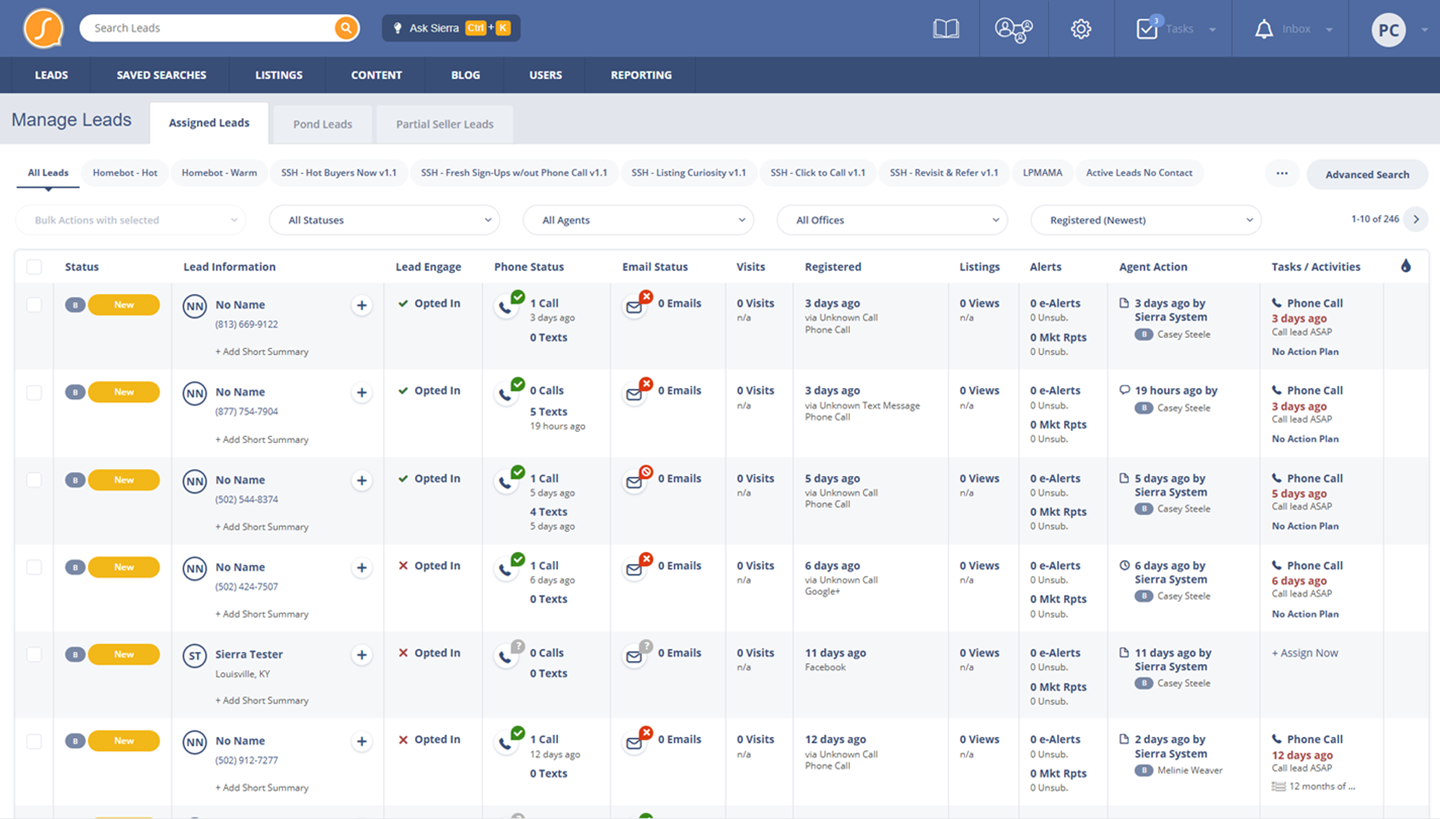
Leads Dashboard: View and manage all assigned leads. Use filters, sorting tools, and bulk actions to streamline outreach and updates.
-
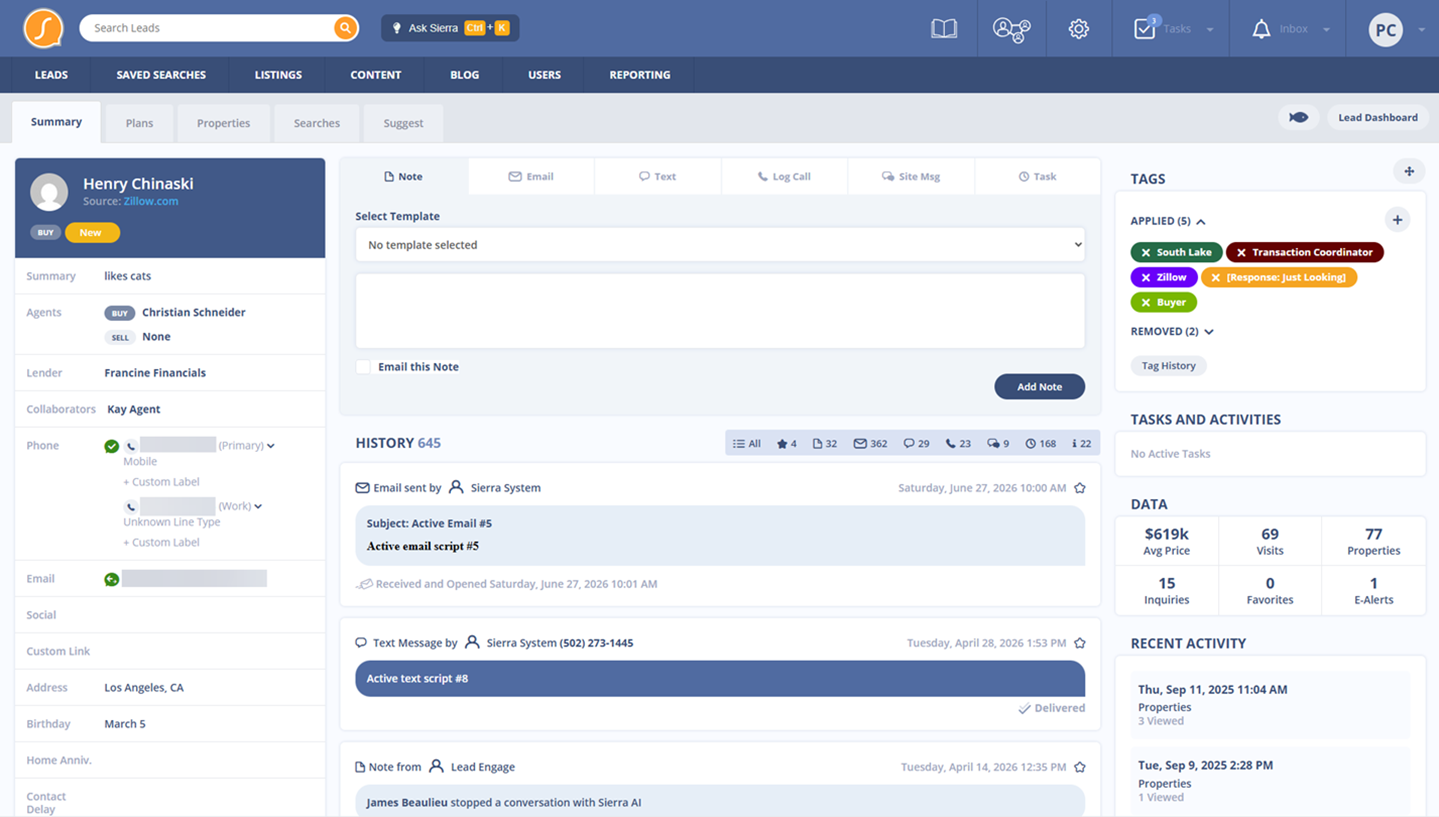
Lead Detail Page: Click on a lead’s name to access their profile. You can update contact information, view and log communications, assign tasks, and more.
-
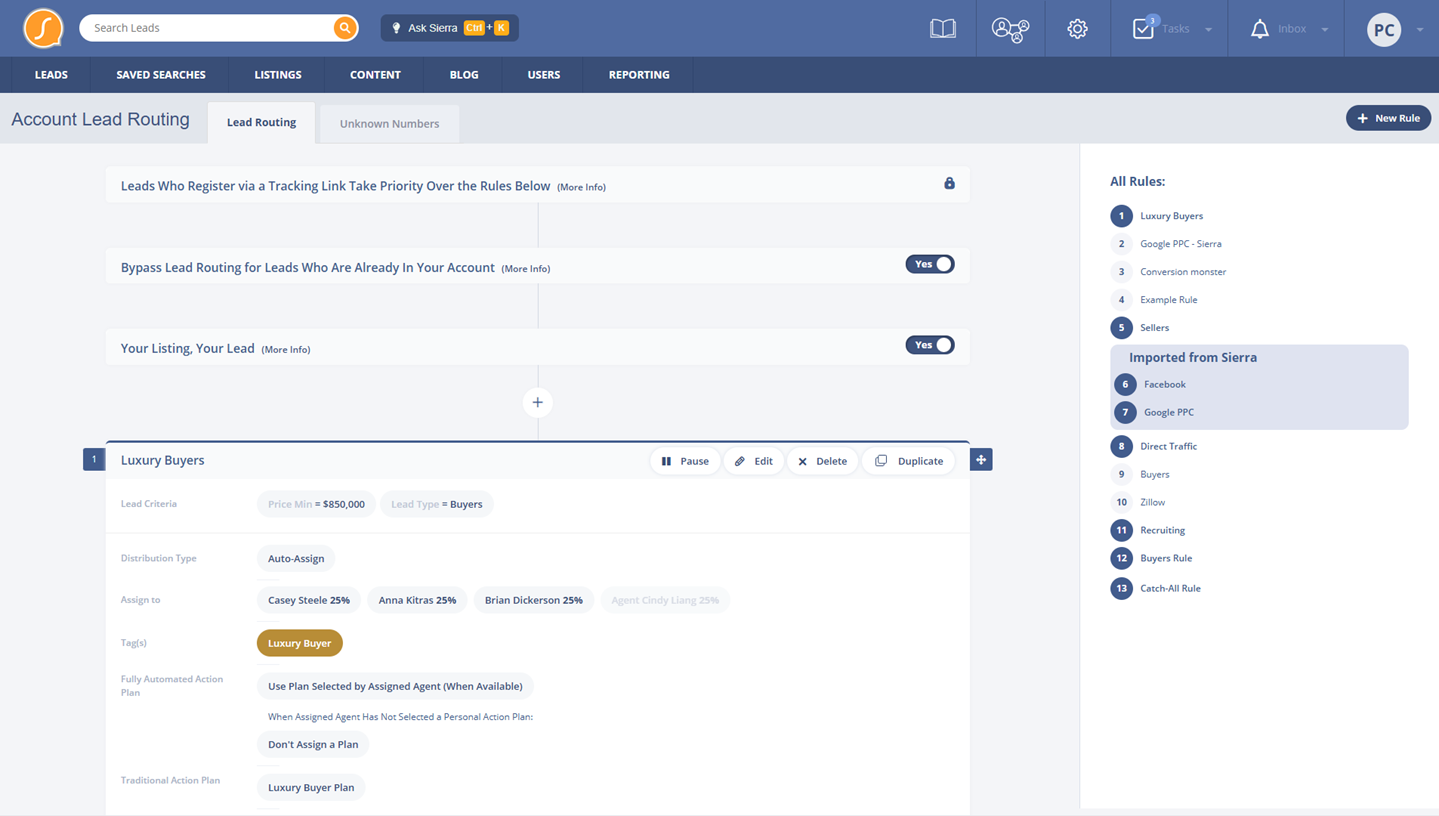
Lead Routing Rules: Automatically assign incoming leads to specific agents based on rules you define—ensuring faster response times and personalization.
Go deeper: Maximize Your Efficiency with the Manage Leads Page for dashboard filters and bulk actions, Manage and Track Lead Statuses for pipeline stages, and Configuring Lead Routing Rules for Your Team to assign leads.
Sending Listing Alerts
-
E-Alerts & Market Updates: Send tailored alerts to buyer leads or market updates to seller leads to keep them informed and engaged.
Automated Campaigns
Engagement Automation: Use Sierra’s built-in campaign tools:
-
Drip Campaigns for time-based email communications
-
Fully Automated Action Plans for hands-off engagement
-
Traditional Action Plans for manual control over follow-up steps
CRM Customization
-
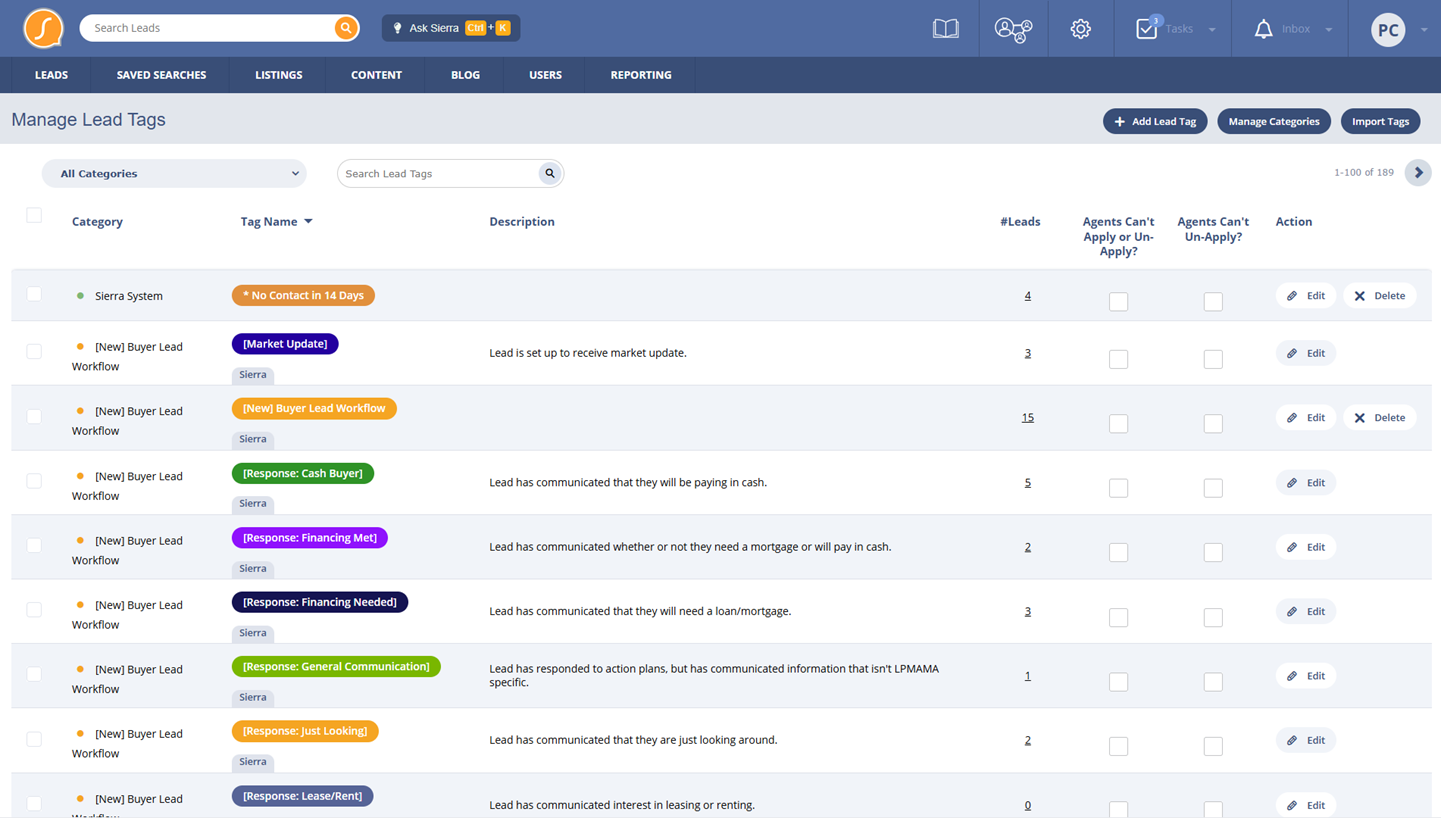
Lead Tags: Organize leads using custom tags for sorting and segmentation.
-
Lead Statuses: Define and track lead progress through your pipeline with customizable statuses.
-
Contact Templates: Save time and maintain consistency with message templates using merge fields for personalization.
Go deeper: Tags Manager: Adding, Editing, and Organizing Lead Tags, Manage and Track Lead Statuses, and How to Create and Manage Contact Templates.
Reporting and Analytics
- Sierra Reporting: Access your account's built-in analytics suite to review agent performance, lead activity, and lead source breakdowns — including assignment volume, lead views, contact activity, and top-performing lead sources — all from one reporting dashboard.
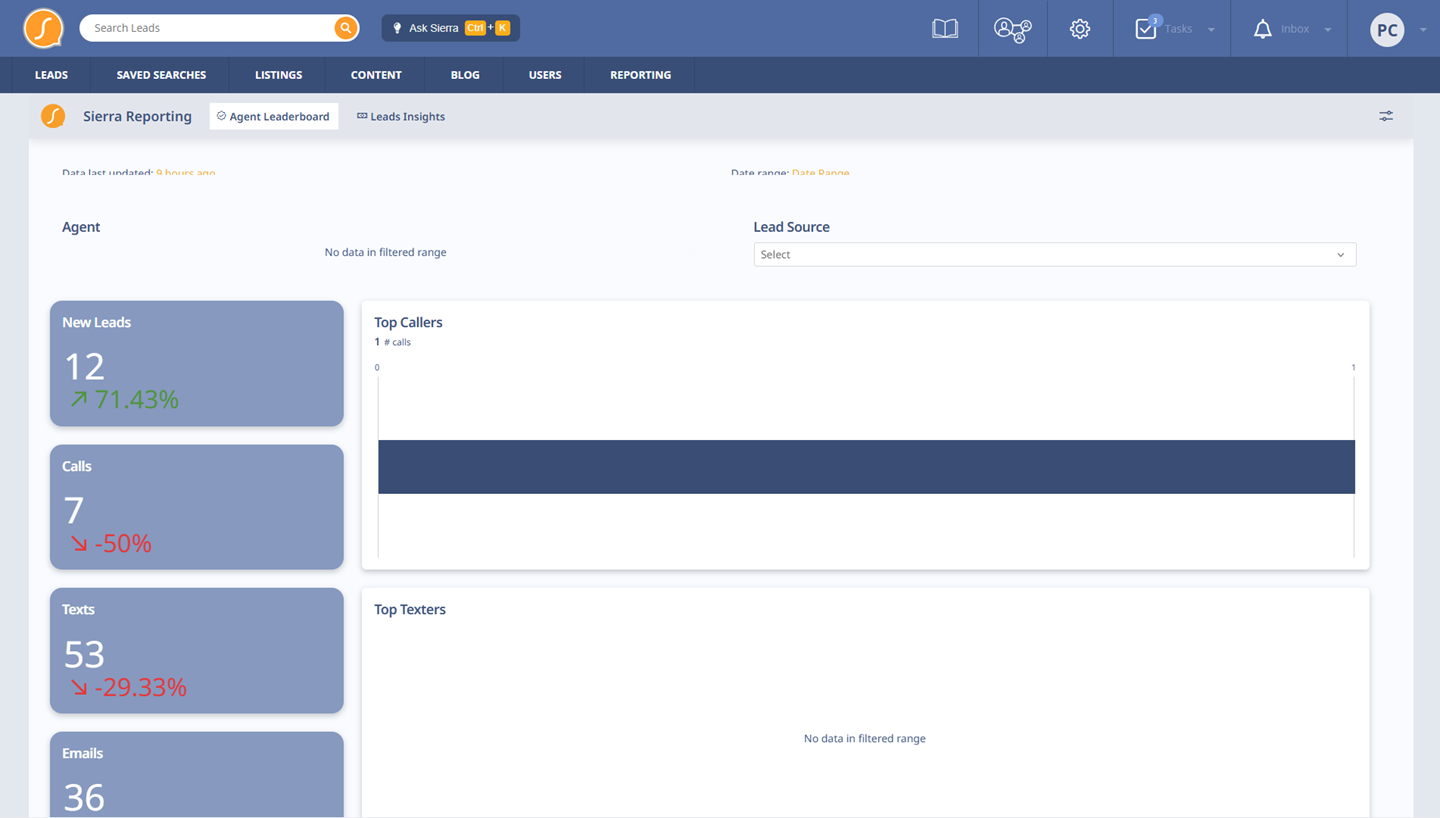
Go deeper: Agent Reporting: How to Measure, Coach, and Improve Agent Performance and Maximize Your Leads: Effective Lead Source Reporting — both live under the Sierra Reporting suite. Also relevant: Agent Leaderboard Overview.
Best Practices
- Implement Lead Routing and Tags early to stay organized as your database expands.
- Use Templates for efficient and consistent communication.
- Schedule routine checks of Reporting dashboards to maintain alignment on performance.
Troubleshooting Common Issues
-
Import Errors: Make sure your .csv file headers match Sierra’s import template format.
-
Missing Leads in Dashboard: Confirm that filters or agent assignments are not excluding the lead.
-
Lead not Receiving Alerts: Verify the email address is correct and alerts are enabled on the lead profile.
FAQs
- Q: Can I assign a lead to more than one team member?
- A: No, each lead can only be assigned to one agent at a time for clarity and accountability.
- Q: How often do Market Updates go out?
- A: You can set the frequency (daily, weekly, bi-weekly, monthly) depending on your client’s preferences.
- Q: What’s the difference between Traditional and Fully Automated Action Plans?
- A: Traditional Action Plans require manual steps; Fully Automated ones run without intervention once triggered.